We’re here to bust some common misconceptions about inflatable paddleboards, especially the performance models. Often developed with direct input from race teams and pro athletes, performance race boards are high-precision gear, holding up through intense training, travel and racing. The iSUP category at the World Championships clearly demonstrates what can be achieved on inflatable boards with some of the fastest paddlers in the world choosing them to compete and win.
We caught up with Indiana Paddle & Surf Co. Team Rider Kimo Kersting, an all-round waterman, German National Team racer and surfer, carving out his place on the European surfing scene.
While splitting his time between studies and chasing the best locations to surf, paddle, or dive, every trip he takes is a calculated step in his pro athlete journey. We sat down with Kimo to talk about inflatable race boards and take a closer look at the Indiana 14×26 RS LTD model developed from the ground up as a dedicated iSUP race board.
Your recent edits on the Indiana 14’0 RS LTD iSUP sparked a lot of interest in high-performance inflatables – what’s your take on using an inflatable for serious training or racing, and how has your experience been so far?
First of all, a big thank you, it’s great to hear there’s growing interest in inflatable race boards. Over time, I’ve become more and more of a fan of inflatables myself. The Indiana RS LTD, for example, is always in the back of my car, and that flexibility makes a huge difference. Whenever I’m near water, I can get on the board and start paddling within minutes.
The RS LTD is definitely a high-performance inflatable with real racing features. It’s not just about convenience – it’s a serious piece of equipment that delivers solid performance. As we go through this interview, I’ll share more about the board’s specific features and how it holds up in different training and racing scenarios.
From your elite racer perspective, what’s the biggest misconception about inflatable race boards?
You should consider that the material and the development have come a long way compared to a few years ago, and have significantly advanced in both construction and performance.
What are the key performance traits of the Indiana 14’0 RS LTD that stood out to you right away?
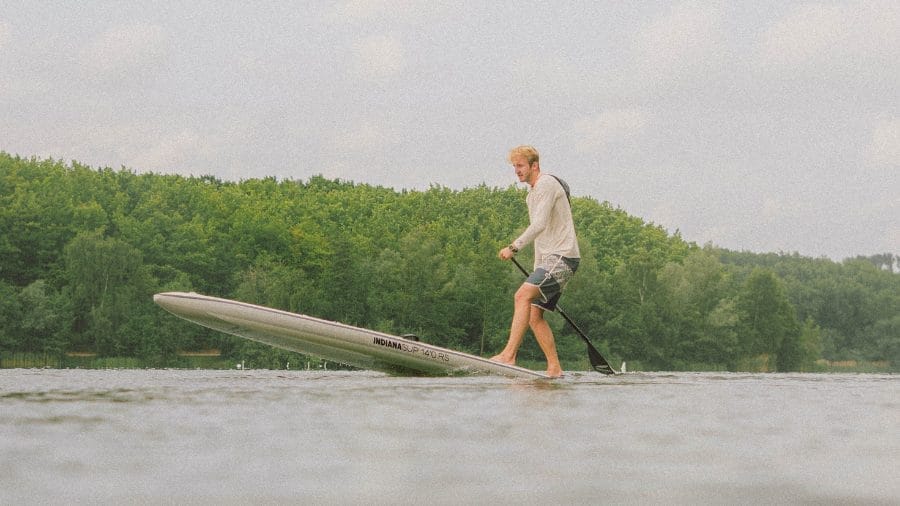
The Indiana 14’0 RS LTD is clearly built for racing. One of the first things I noticed was the integrated speed tail with a defined edge, similar to what you’d find on a hardboard, it really helps the water release cleanly and boosts glide. The overall shape feels fast and efficient, and once you get up to speed, the board maintains its momentum really well.
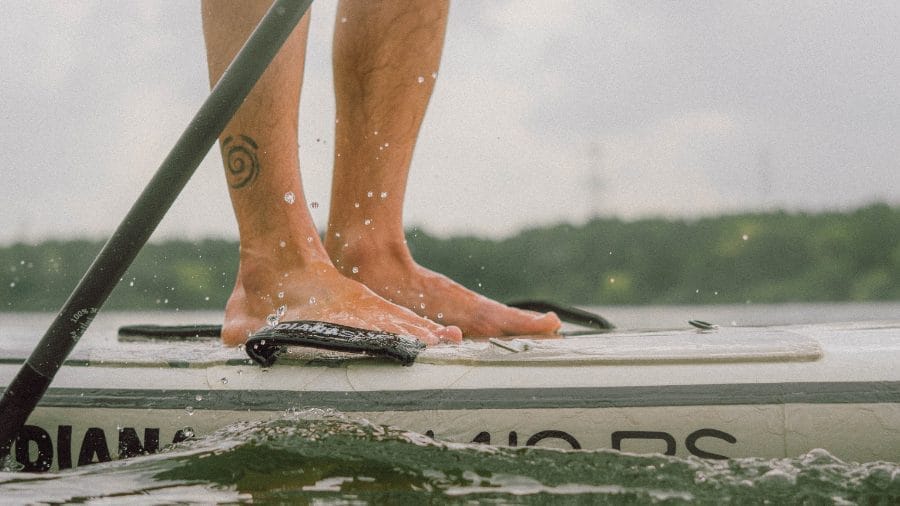
Another standout feature is the fiberglass foot bases. They provide a super stable and secure stance, which makes a big difference during powerful strokes or quick transitions. All in all, it’s a well-designed board with real performance in mind.
Photo by Marie Luise Rosi
Can you break down how the board handles in terms of stability, glide, tracking and stiffness compared to a hardboard?
Inflatable race boards have come a long way in recent years, and the gap to hardboards is getting smaller, especially in terms of stability, glide, and tracking. For beginner or intermediate paddlers, the switch to an inflatable is often easier and more forgiving, which makes it a great entry point into the sport.
From my perspective, as someone who usually trains and races on hardboards, I was positively surprised by how well the inflatable handles. The transition from hardboard to inflatable feels very natural – in fact, I’d say it’s easier than going the other way around.
One key difference remains in stiffness and power transfer. A hardboard still gives you a more direct and efficient stroke, while inflatables tend to absorb a bit of that force. But for many paddlers, especially when starting out or training, that trade-off is minimal and totally manageable.
Photo by Marie Luise Rosi
How does your technique or approach shift, if at all, when paddling an inflatable at race pace?
Where do you see inflatables fitting into an elite paddler’s training or race calendar? Travel convenience, competition formats etc.
When it comes to travel, inflatables are unbeatable, especially if you’re flying or packing everything into a small car. In my own training, I’ve sometimes used an inflatable board to build strength and stability, with the goal of feeling even faster and more efficient on a hardboard later. It’s a bit like what we used to do in handball – training with a medicine ball to improve throwing power with a regular ball.
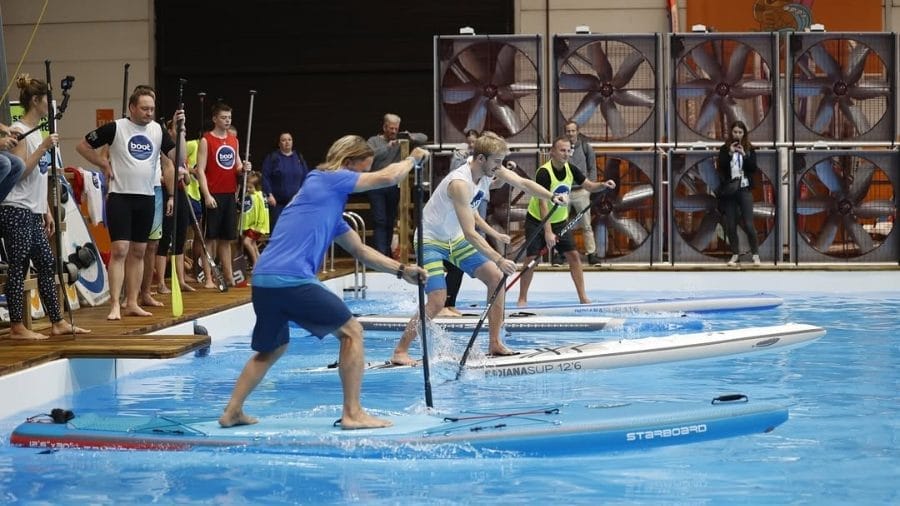
I also think inflatable competitions could be a great option, especially for sprint and technical races. In tech racing, for example, you often have close contact at the buoys with multiple paddlers, and using an inflatable means you don’t have to worry as much about damaging your board during those tight turns.
Photo by Marie Luise Rosi
Would you consider racing an iSUP in an official competition, and if so, what conditions or formats would it be ideal for?
At the moment, I’m not competing because I’m focused on finishing my studies, and I’ll be travelling a lot for surfing towards the end of the year. That said, I did consider entering a sprint race on an inflatable this season – it didn’t work out in the end, but I definitely want to give it a try. I’m especially curious to see how the Indiana RS LTD performs compared to hardboards. It could be a great option for certain formats, especially sprints or events with easier logistics.
Photo by Marie Luise Rosi
Do you think iSUPs like the Indiana RS LTD are opening up racing to more paddlers and how important is that for growing the sport?
I definitely hope so, because inflatables can be a more affordable and accessible option for many people who want to get into racing. That said, the board market is quite oversaturated, every brand seems to release a new model every year, often with only minimal changes.
From a sustainability perspective, I’d really like to see new boards being launched every two years instead of annually, just because “that’s how it’s always been done.” I don’t believe race boards are reinvented every single season, and the SUP community, and the environment, would likely benefit from a slower, more thoughtful approach. Still, I can’t deny the excitement of having a fast board beneath your feet on the water!
Photo by Marie Luise Rosi
What advice would you give to intermediate or aspiring racers curious about inflatable race boards?
When it comes to training, my best advice is simply: give it a try. The most important thing is to spend time on the water and enjoy it. Inflatable race boards are a great way to do that – they’re easy to take along and can even turn into a fun activity with family and friends. Keeping it fun is key, especially when you’re starting out.
Photo by Marie Luise Rosi
Thank you so much Kimo for your time and shedding such clear light on a topic that’s really capturing a lot of attention!
We’re about to head into the second half of the SUP racing season, but with summer in full swing, there’s another side of the sport that’s impossible to ignore. Lakes, rivers and coastlines are packed with people enjoying stand-up paddleboarding – whether it’s a family day out, a first paddle, a touring adventure or simply […]
Following the announcement of its European expansion and the successful rollout of its boards into Decathlon stores across the Baltic region, BassSUP – the premium Polish watersports brand founded in 2016 as an inflatable SUP specialist – has expanded its range with the launch of the Bass Trinity 13’8″ x 35″ x 6″ SUP-Kayak board, […]
The launch of the all-new, lightweight Woven X Platin inflatable race board series marked the latest innovation from Light Board Corp – the team behind the PARADOXA race board, organisers of the SUP Alps Trophy, and the creators of one of the most hyped events, the Lake Rocks Festival. Known as the “Light Riders”, the […]
A first paddleboard often becomes the benchmark for every board that follows. Long after the details are forgotten, most paddlers remember how that first board felt beneath their feet – the confidence it inspired, the lessons learned and the adventures that came with it. Yet choosing that first board can feel overwhelming and finding the […]
Swiss-based Indiana Paddle & Surf Co. – long recognised for its premium SUP, surf, and foil equipment – has unveiled a comprehensive new lookbook for 2026 covering gear across all disciplines. The collection brings together the latest additions to Indiana’s SUP, foil, and surf range – including Heavy Duty paddleboards designed for schools and rentals, […]
When Swiss-based brand Indiana Paddle & Surf Co. – renowned for premium boards, foils, and SUP equipment – backs a watersports first, you know it means business. The brand supports an impressive roster of record-breaking athletes and bold adventurers, from alpine lake climbs and marathon pump-foiling feats – like Jérôme Baudoux and Nicolas Iten’s pump-foiling records […]
From its skateboarding roots, Swiss watersport brand Indiana Paddle & Surf Co., is a genuinely grassroots company – shaped and owned by riders. The brand takes an honest approach to board design, prioritising innovation and thorough testing over marketing and gimmicks. They work closely with shapers whose expertise comes from watersports like windsurfing and surfing, […]
For Francisco Miguel Carvalho (aka The Man), 46, former Brazilian Jiu-Jitsu athlete turned SUP racer from Windsor, stand-up paddleboarding is more than a sport – it’s a lifeline. In just four years, he has transitioned from curious beginner to a familiar face on the UK race circuits, navigating the same highs and lows that define […]
Indiana Paddle & Surf Co‘s rider, Jose Manuel Muño, 48, from Algeciras, Cádiz (Andalusia, Spain), is no stranger to big-stage battles on the EuroTour, paddling with some of the world’s best – while firmly holding his ground in the amateur division. His 2024 season was packed with podiums: second place at the Spanish Sprint Cup […]